


The variability of animacy in the lexicon of card games: the role of personification

https://doi.org/10.25587/2222-5404-2026-23-1-80-93
Abstract
This paper is devoted to the study of the variability of the categories of animacy/inanimacy, which is one of the fundamental grammatical categories in the Russian language. This category not only serves a formal syntactic function (determining the form of the accusative case) but also reflects the cognitive perception of living and non-living objects by native Russian speakers. However, the classification of specific lexical items within this category is often ambiguous, which indicates the complex interaction of semantics, grammar, and linguistic practice. One manifestation of such variability is observed in the nouns denoting card game elements: although semantically inanimate, these lexemes can function grammatically as animate nouns (e.g., бить туза – to beat the tuz). Based on the data from the Russian National Corpus (RNC), this article analyzes a representative case of such variability — the nouns referring to card game elements, particularly the lexemes tuz and dzhoker. Despite their inherently inanimate referents in the real world, these lexemes may undergo cognitive personification in the gaming discourse, which leads to their grammatical animacy. The purpose of this study is to identify the patterns and factors that determine the choice of animate or inanimate grammatical form for the lexemes tuz and dzhoker. The conducted analysis confirms that the variability in animacy is manifested in the gaming lexicon of tuz and dzhoker, yet to varying degrees: the level of animacy of tuz is higher than that of dzhoker. An analysis of the influence of factors such as personification, type of meaning, and grammatical number on the choice of animate or inanimate forms has shown that, unlike the dzhoker, the tuz belongs to the category of lexemes whose animacy is strictly governed by explicit semantic and grammatical criteria.
About the Author
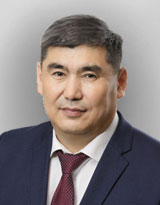
Diao RuiRussian Federation
Diao Rui — Postgraduate student, Department of General Linguistics named after L. A. Verbitskaya
Saint Petersburg
References
1. Khaburgaev GA. Sketches on the historical morphology of the Russian language: Nouns. Moscow: Moscow State University Press; 1990: 296 (in Russ.).
2. Krisko VB. The development of the animacy category in the history of the Russian language. Moscow: Lyceum; 1994: 224 (in Russ.).
3. Rusakova MV. The animacy/inanimacy category: Implementation in the speech of units with transferred meaning. Acta Linguistica Petropolitana: Transactions of the Institute of Linguistic Research. 2007;3(3):118–153 (in Russ.).
4. Ilchenko OS. On the development of inanimate animacy in the history of the Russian language. Vestnik of Saint Petersburg University. 2010;9(3):142–149 (in Russ.).
5. Tsimmerling AV. Animacy. Russian Language. Trudy Instituta Russkogo Iazyka imeni V.V. Vinogradova. 2020;2(24):43–57 (in Russ.).
6. Bondarko AV. Theory of morphological categories and aspectological studies. Moscow: Languages of Slavic Cultures; 2005: 624 (in Russ.).
7. Itsikovich VA. Animate and inanimate nouns in modern Russian (norm and trend). Voprosy Jazykoznanija. 1980;(4):84–96 (in Russ.).
8. Long Deyin. Exploration of the Embodied Philosophical Foundation of Personification. Journal of Xiamen University of Technology. 2023;31(6):84-90 (In Chinese).
9. Lakoff G, Johnson M. Metaphors We Live By. trans. from English by A.N. Baranov. Moscow: Editorial URSS; 2004:256 (in Russ.).
10. Gin YI. The poetics of grammatical gender. Petrozavodsk: Karelian State Pedagogical Academy; 1992: 168 (in Russ.).
11. Mecit A., Lowrey T. M., Shrum L. J. Grammatical Gender and Anthropomorphism: “It” Depends on the Language. Journal of Personality and Social Psychology. 2022;123(3):503-517.
12. Alyssa D. Edwards, Daniel M. Shafer. When Lamps Have Feelings Empathy and Anthropomorphism Toward Inanimate Objects in Animated Films. Projections. 2022;16(2):27-52.
13. Long Deyin. A Study on Personification on Production from the Perspective of Consciousness Double Structure. Journal of Chongqing Jiaotong University (Social Sciences Edition). 2021;21(5):101-107 (In Chinese).
14. Dictionary of the Russian Academy 1789–1794. Part VI. Available at: http://it-claim.ru/Projects/ESAR/SAR/PDFSAR/Framesetpdf.htm [Accessed 21 May 2025] (in Russ.).
15. Ushakov DN. Explanatory Dictionary of the Russian Language: In 4 vol. Vol. 4. Moscow: Sovetskaya Entsiklopediya: OGIZ; 1935—1940:1502 (in Russ.).
16. Ozhegov SI. Dictionary of the Russian Language. Academy of Sciences of the USSR. Institute of the Russian Language; 1949: 968 (in Russ.).
17. Evgenyeva AP. Dictionary of the Russian Language: In 4 vol. Vol. 4. Moscow: Russian Language Press; 1981–1984: 782 (in Russ.).
18. Diao Rui. A cognitive analysis of the category of animation and gender in Russian language (by the example of the word ferz). Cognitive Studies of Language. 2024;2-2(58):413–417 (in Russ.).
19. Evgenyeva AP. Dictionary of the Russian Language: In 4 vol. Vol. 1. Moscow: Russian Language Press; 1981–1984: 696 (in Russ.).
Review
For citations:
Rui D. The variability of animacy in the lexicon of card games: the role of personification. Vestnik of North-Eastern Federal University. 2026;23(1):80-93. https://doi.org/10.25587/2222-5404-2026-23-1-80-93
JATS XML



 Email this article