


Verbalization of the Mountain Image (“Khaya”) in the Linguistic Consciousness of Abyysky District Residents: Evidence from an Associative Experiment

https://doi.org/10.25587/2222-5404-2025-22-4-119-126
Abstract
This article investigates the verbalization of the image of “Khaya” (‘mountain’) in the linguistic consciousness of Yakut language speakers residing in the Abyysky District of the Republic of Sakha (Yakutia). The relevance of the study is determined by the need to document and preserve the linguistic heritage of Arctic indigenous peoples, whose worldviews assign a central role to sacred landscape concepts. The aim of the research is to identify the specifics of the mental representation of the mountain image within an ethnolocal group of northern Yakuts through the analysis and comparison of data from an associative experiment. The empirical basis comprises the results of an associative experiment conducted by the author in 2025 in the village of Kuberganya of the Abyysky District (n=32), alongside materials from the Associative Dictionary of the Yakut Language (2005-2010) for comparative analysis. The study employed interpretive analysis of responses, classified according to the type of associative links (similarity/ contiguity). The findings reveal the dominance of a spatial code in the perception of the concept. The key feature is verticality (the frequent response “ürdük” – ‘high’ - 32%), which actualizes the image of the mountain as a spatial dominant, an obstacle, and an object to be overcome. A unique thematic emphasis on the North (“khaar” – ‘snow’, “khotu doidu” – ‘North’) was identified among the Abyy respondents, reflecting the influence of the natural and climatic context. It was established that the associative field of the stimulus is predominantly syntagmatic in nature (74%) and also contains singular responses that reveal the polysemy of the lexeme ‘khaya’. The study demonstrates that, despite the polysemous nature of the concept, its actual content in the speakers' consciousness is determined by both the cultural-historical background and direct life experience within a specific natural environment. The obtained results underscore the value of local studies for a comprehensive understanding of the Yakut people's linguistic worldview and can be utilized in further comparative and diachronic research on the Yakut language's conceptual sphere.
Keywords
Yakut language,
linguistic consciousness,
mental lexicon,
world image,
associative experiment,
Abyysky District,
associative-verbal network,
associative field,
associative connections,
linguistic worldview
Supporting agencies: The research was funded by the grant of the Russian Science Foundation “Languages and Cultures of the Peoples of the North and Arctic of the Russian Federation: Comprehensive Socio-Humanitarian Research (based on Big Data Analysis)” No 25-78-30006 (22.05.2025)
About the Author
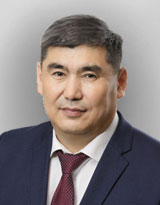
A. P. Vasileva
M.K. Ammosov North-Eastern Federal University
Russian Federation
Russian Federation
Alina P. VASILEVA – Research Scientist, Research Laboratory "Linguistic Ecology of the Arctic"
Scopus Author ID: 57210373485, Researcher ID: AAP-1611-2020, AuthorID: 1067049
Yakutsk
References
1. Danilova NK. The concept of “North/Khotu” in the ideas of the Sakha and Dolgan people. Arctic XXI century. 2015;2(5):121-126 (in Russian).
2. Androsova FS. Linguistic representation of the concept “Khotu” in the linguistic consciousness of Yakut language speakers. MNKO. 2018;6(73):449-451 (in Russian).
3. Zakharova NE. Experimental study of the peculiarities of the linguistic consciousness of bilingual Evenkis (using the example of the concept man/bee/kiһi). Philology. Theory & Practice. 2020;3:215-219 (in Russian).
4. Kuzmina RP. Features of the conceptualization of snow in the linguistic consciousness of the Evens. World of Science. Series: Sociology, Philology, Cultural Studies. 2021;12(4). URL: https://sfk-mn.ru/PDF/16FLSK421.pdf (Accessed: 15 September 2025) (in Russian).
5. Lukina MP. Linguistic representation of the concept “sun” in the linguistic culture of the peoples of the North (based on the material of the Yakut and Yukaghir languages). Humanitarian vector. 2021;16(1):102-110. (in Russian) https://doi.org/10.21209/1996-7853-2021-16-1-102-110
6. Danilov IA, Stepanova YuG. Concepts of “Small Homeland” and “Big Homeland” in Linguistic Consciousness of Residents of Northeast Russia. Nauchnyi dialog. 2025;14(3):25-42 (in Russian) https://doi.org/10.24224/2227-1295-2025-14-3-25-42
7. Romanova EN. Traditional knowledge of the northern Turkic-Sakha peoples about nature fin the context of «sentient ecology» (reality and symbolic space). Arctic XXI century. 2025;(3):80-93 (in Russian) https://doi.org/10.25587/2310-5453-2025-3-80-93
8. Bitkeeva AN., Khokholova IS. The resources of ethnicity in the urban identity of Northerners. Arctic XXI century. 2025;(2):32-47 (in Russian) https://doi.org/10.25587/2310-5453-2025-2-32-47
9. Vanhonnaeker M. Comparative ethnolinguistic analysis of the term Mammoth among the Koryak and Chukchi peoples. Арктика XXI век. 2025;(1):19-31. (in English). https://doi.org/10.25587/2310-5453-2025-39-1-19-31
10. Malysheva NV, Kang D. Ethnolinguistic description of some dialect names of bear in the Yakut language. Arctic XXI century. 2025;(1):54-75 (in Russian) https://doi.org/10.25587/2310-5453-2025-39-1-54-75
11. Osorova MA. Phytonymic vocabulary in the Yakut, Tuvan, Khakas, Altai languages: motivational aspect. Arctic XXI century. 2025;(2):75-86 (in Russian) https://doi.org/10.25587/23105453-2025-2-75-86
12. Danilova NK. Sacred landscape: the mental image of the Mountain among the Northern Yakuts. North-Eastern Humanitarian Bulletin. 2019;3(28):55-61 (in Russian).
13. Lavrenova OA, Filippova VV. Toponymy in the Cultural Landscape of Yakutia: The Problem of Textualization. Bulletin of the Russian Academy of Sciences. Geographical Series. 2019;(2):129136 (in Russian).
14. (Neo)psycholinguistics and (psycho)linguacultural studies: new sciences about the speaking human being. Moscow: Publishing House “Gnosis”, 2017:392 (in Russian).
15. Zamorshchikova LS, Romanenko AA. Associative dictionary of the Yakut language. 2012. URL: http://adictsakha.nsu.ru/dict [Accessed: 10 September 2025] (in Russian and Yakut).
16. Martinovich GA. Types of verbal connections and relationships in the associative field. Voprosy psihologii.1990;(2):143-146 (in Russian).
17. Martinovich GA. An Experience of a Comprehensive Study of Associative Experiment Data. Voprosy psihologii. 1993(2):93-99 (in Russian).
18. Ovchinnikova IG. The structure of the mental lexicon: age dynamics of associative connections. Psycholinguistic aspects of the study of speech activity. 2006;(4):85-92 (in Russian).
19. Tokarev SA. On the mountain cult and its place in the history of religion. Soviet ethnography. 1982;3:107-113.
20. Sodnompilova MM. The world in the traditional worldview and practical activities of the Mongolian peoples. Ulan-Ude: Publishing house of the BSC SB RAS, 2009;366 (in Russian).
21. Seroshevsky VL. Yakuts. Experience of ethnographic research. M., 1993:736 (in Russian).
22. Zamorshchikova L, Nakhodkina A. Mountain in northern landscape: epic space and real places. Proceeding of the International Multidisciplinary Scientific Conference on Social Sciences and Arts SGEM, Volume III Education and Edicational Research, Albena, Bulgaria. 2016:211-217. https://doi.org/10.5593/sgemsocial2016B13
23. Pekarsky EK. Dictionary of the Yakut language. Vol. III. Moscow, 1959 (in Russian).
24. BTSYaYa – Explanatory dictionary of the Yakut language = Sakha tylyn byhaaryylaakh tyldjyta. Academician Sciences Rep. Sakha (Yakutia), Institute of Humanitarian Research; ed. PA. Sleptsov. Novosibirsk: Publishing House “Nauka”; 2004-2018 (in Russian and Yakut).
Review
For citations:
Vasileva A.P. Verbalization of the Mountain Image (“Khaya”) in the Linguistic Consciousness of Abyysky District Residents: Evidence from an Associative Experiment. Vestnik of North-Eastern Federal University. 2025;22(4):119-126. (In Russ.) https://doi.org/10.25587/2222-5404-2025-22-4-119-126
Views:
41
JATS XML



 Email this article